Is Non-Alcoholic Bourbon The New Light Whiskey?
By Richard Thomas
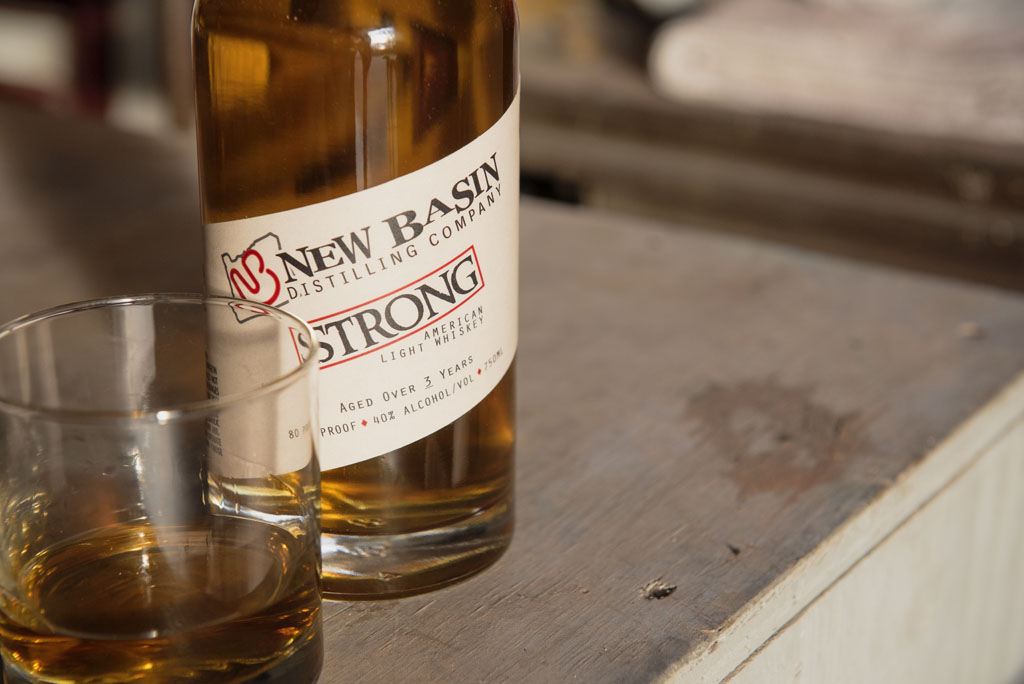
(Credit: New Basin Distilling)
Spirits broadly and whiskey especially experiencing a sales slump and part of the reason is that the generational cohort entering the marketplace, Gen Z, has broader range of choices in legally available mind altering substances then their predecessors to choose from while also sharing the signature characteristic of youth everywhere: buck what your elders are doing. A concurrent trend is a focus on health, with a sub-current of that trend trying to promote cannabis products by demonizing alcohol.
With an environment like that, it was inevitable that non-alcoholic bourbon would inevitably be introduced into the market as a push to win over people who, for whatever reason, have moved away from America’s Native Spirit in the name of rejecting alcohol in general. Enterprises like the Free Spirits Company and Teaspoon Spiritless have zero alcohol whiskey on the market, although in interviews the folks from those companies admit their products are a work in progress. The more successful those companies are and/or the more the market slumps, the more certain it becomes that a major international drinks giant like Diageo, Suntory Global or Pernod Ricard will follow their lead. Those major drinks companies products may already be in the works.
As Light Whiskey Was, Destined To Fail?
The circumstances and intentions behind zero alcohol whiskey is eerily reminiscent of the introduction of light whiskey. Light whiskey was introduced at the behest of the liquor industry in 1968. Unlike other categories codified in Federal liquor regulations, which describe products already in existence (such as the recent decision to make American Single Malts official), light whiskey was invented by the industry itself in a typically corporatized manner.
Most enthusiasts misunderstand how most whiskey products come to the market, believing them to originate in the imaginations of master distillers and their lieutenants. Instead, most of the time the order to make something new comes out of the marketing or sales department; the folks at the distillery are charged with finding a way to create it. So it was with light whiskey, and entire new category created to chase consumers who were already moving away from traditional whiskeys to vodka.
Light whiskey is distilled to up to 180 proof, whereas traditional whiskey can only go as high as 160 proof off the still. Also, it is aged in either uncharred new oak barrels or (more frequently) used barrels. The product is therefore much cheaper to make than traditional whiskeys, because the barrels are often recycled and the spirit going in stuffs more alcohol per container. The matured whiskey is also lighter in flavor and texture, going in much closer to vodka than bourbon or rye, and absorbing far less flavor from either uncharred or used oak.
Light whiskey entered the market in the early 1970s and proved such a flop I often point to it as an example of how an entire generation of corporate professionals can very often succumb to group think in pursuit of a genuinely bad idea. The whiskey industry was never going to out-vodka actual vodka, and light whiskey had little appeal to whiskey drinkers.
Ironically, light whiskey made a modest comeback during the Bourbon Boom. As an obscure relic, light whiskeys often sit neglected and unwanted in distillery inventories, so when an NDP acquires those stocks the whiskey within often have high age statements and hazmat proof levels. Combine those two features and a certain wing of bourbon nerdom is guaranteed to buy them.
History Repeating Itself?
If zero alcohol whiskey is the light whiskey of the 21st Century, it is because it repeats the error of trying to out-vodka the vodka. Although I believe the companies in this sector are earnest in their pursuit of a product that smells, tastes and feels like at least a mass market level whiskey (i.e. Jim Beam, Johnnie Walker, etc.), they have not achieved this yet and may never do so.
There are two basic approaches to making this product: remove alcohol from the drink or build the drink up from scratch. The former approach never really works for any alcoholic beverage, while the later takes times and eventually runs into limitations. The best example of how developing similar products work in practice is the non-alcoholic (NA) beer. NA beers like O’Douls have been around for decades, but it was only in the last decade that NA beers have approached mass market brews for quality (an example is Heineken 0.0, introduced in 2017). Even so, most NA beers are still unloved, and the dislike for NA wine is even stronger.
The most obvious work-around for the thorny quality issue is mocktails. NA whiskey could find a real niche in replacing the alcohol in an Old Fashioned or Whisky Sour, because there the subpar nature of the NA liquor can be hidden behind the other ingredients. However, NA/mocktail versions of whiskey cocktails with multiple liquors in the recipe (Manhattans and Sazeracs, for example) cannot take this approach, since so many of the ingredients would also need to be NA.
Zero alcohol whiskey could have a real future, so long as it remains the niche product it is. NA drinks are 0.7% of the US drinks market, which may not sound like much until you realize that it grew by 27% this year. Almost all of that growth, however, can be explained by the presence of drinkable NA beer on the market, with 4/5s of that 0.7% coming from NA beer. Although folks who are pursuing genuine sobriety may enjoy the occasional NA drinks substitute, in much the same way vegans gorge on fake meat, it is hard to see them showing as much affection for NA replacements for high proof spirits in and of themselves. Too much of the experience will always be missing. Even more obvious is no one is going to win back people who prefer pot or shrooms by offering them zero alcohol bourbon. This market may be growing fast, but it is still tiny and probably too tiny to suffer a liquor giant jumping into the game with both feet.