Q&A With Brendan Cook, Wyoming Whiskey Master Blender
By Richard Thomas
(Credit: Wyoming Whiskey)
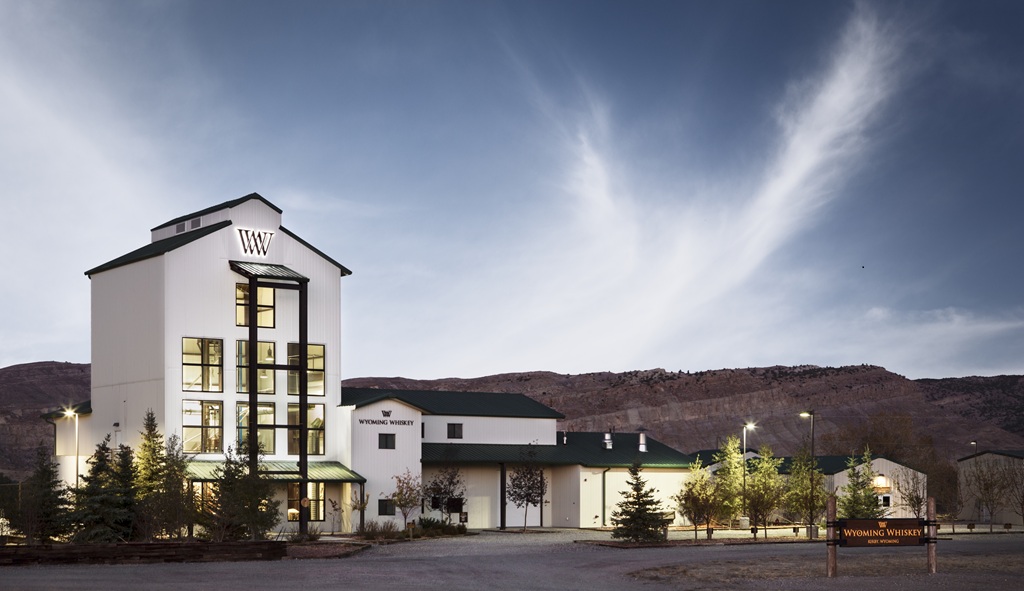
A decade ago, I definitely did not have it on my Bourbon Boom bingo card that a distillery in remote Wyoming was going to become one of the best established of the newcomers to American Whiskey. It’s really rather shocking, when you think about it, and the distillery’s home base underlines that point best: Kirby, Wyoming has a population of fewer than 80!
Founded by Brad Mead, Kate Mead, and David DeFazio in 2006, Wyoming Whiskey opened their distillery in 2009 and launched their first whiskey in 2012. The company grew in stature rapidly thanks to solid business plan and sound execution therein coupled to expert consulting from industry veterans Steve Nally and Nancy Fraley. But famous consultants are essentially hired guns, and during the Bourbon Boom one rarely received undivided attention from one, and inevitably they move on. Part of the growing maturity of a new distilling company is when they move on to their own team, which Wyoming Whiskey did completely when Brendan Cook succeeded Fraley as Master Blender.
Cook brought with him one of the most exotic backgrounds of any leading production figure in American Whiskey today, which was one of a few issues he addressed in an interview with me.
RT: When I was looking at your background, I saw a feature that is fairly common for new blenders and distillers, and one that is uncommon. I’ll start with the common one: you got your start in brewing. But from there, you went straight to work in the Scotch industry. What kinds of things does one learn making beer then transfer into making whisky?
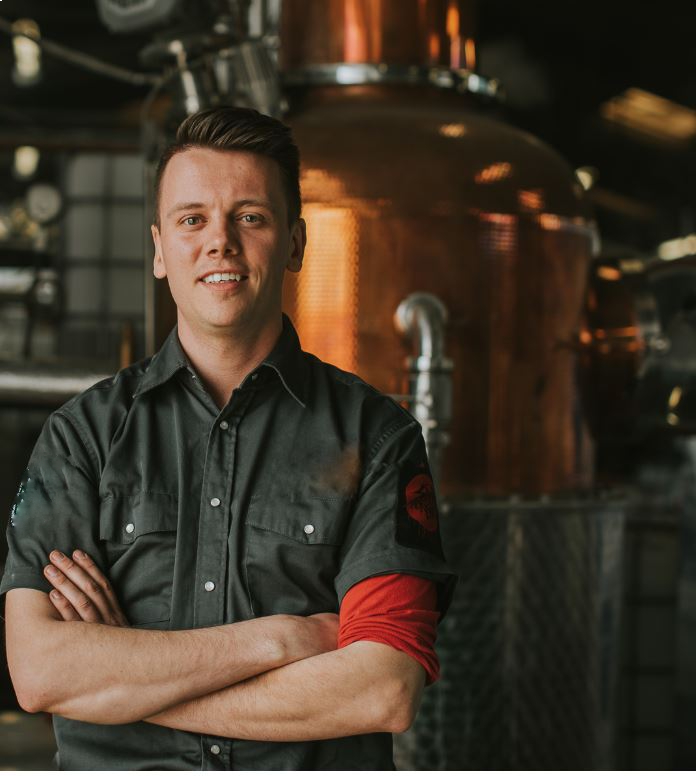
BC: Starting in brewing gave me an early appreciation for how subtle variations in raw ingredients and fermentation can dramatically shape flavor. You develop a sense for timing, precision, and consistency, which are lessons that carry over directly into whisky. In brewing, you see almost immediately how decisions affect the final product, which trains you to anticipate how a whiskey will evolve over months and years in a barrel. That perspective has been invaluable in crafting whiskey with intentionality.
(Credit: Wyoming Whisky)
RT: Now I’ll follow that up with the uncommon feature — but it’s something I like when I see it: you’ve worked in Scotch and Canadian whisky before coming to Wyoming. What did you learn from your time in Scotland and then making whisky in British Columbia that plays into working with the American whiskeys in Kirby?
BC: Working in Scotland and Canada gave me a comprehensive perspective on how a certain environment shapes whiskey over time. In Scotland, I developed a deep understanding of how distillery character, cask selection, and local conditions interact to create a distinct signature style. In Canada, I saw how seasonal swings, including extreme heat, freezing winters, and shifting humidity, directly influence maturation, extraction, and flavor development. At Wyoming Whiskey, I apply these learnings to our high-altitude climate and dramatic temperature variations. It’s about understanding how barrels respond to their surroundings and letting that inform our blending decisions, rather than forcing a uniform profile. The result is whiskey that reflects both the intensity and the nuance unique to Wyoming’s environment.
RT: One of the things Canadian whisky is noted for, at least from its major distillers, is producing a handful of single grain-type whiskies (all corn, all rye, etc.), aging some in new wood and some in used wood, and creating a broad palette from which to blend whiskeys from. How does that palette work in practice compared to working with bourbon? I imagine even a place like Four Roses, with two mash bills, five yeast strains and all new wood aging, must have an inventory much closer together in terms of flavor profile than the Canadian model.
BC: We take a very focused approach. Rather than building a palette from multiple grain streams or cask types, we rely on our single wheated [bourbon] mashbill and virgin oak casks. What gives us real breadth is our extreme warehouse environment. Each level develops its own character, so even with one mash bill we see remarkable natural variation in extraction, concentration, and flavor development. That allows us to craft unique expressions that amplify our pillars of flavor. We build nuance from the natural variation created by our environment. It is a very intentional way of working, and it lets the distillery’s identity shine clearly through every whiskey we make.
RT: Given your background in those two categories, what are your go-to’s for Scotch and Canadian whisky?
BC: My time in Scotland and Canada definitely shaped the whiskies I reach for, and I am always looking for expressions that give you a real sense of place and showcase distillery character. For Scotch, I often find myself going back to Glenglassaugh. The balance between fruit and that coastal influence is a testament to letting the distillery character speak for itself, and I have always admired how their spirit carries an unmistakable feeling of where it is made. It is the kind of whisky that reminds you how expressive a distillery’s raw character can be when it is given the room to shine. On the Canadian side, I have a soft spot for the work being done by Still Head. Their rye, especially the releases matured in native oak species, really leans into the idea of celebrating place and environment. Sons of Vancouver is another favorite. Their whiskies show just how much flavor and personality the Canadian category can deliver when you embrace creativity and a confident point of view. Both distilleries make spirits that feel distinctly Canadian, while still pushing the category forward. Those are the bottles I tend to reach for when I want something that reflects the lessons I have taken from those regions: a strong sense of place, a willingness to experiment, and a commitment to flavor above all else.
RT: Watching Wyoming Whiskey grow from afar, much has been made of the input of first Steve Nally and then Nancy Fraley. You’ve been at Wyoming for more than two years now and in place as Master Blender for about a year and a half. From your point of view, where are the continuing influence of Nally and Fraley best seen?
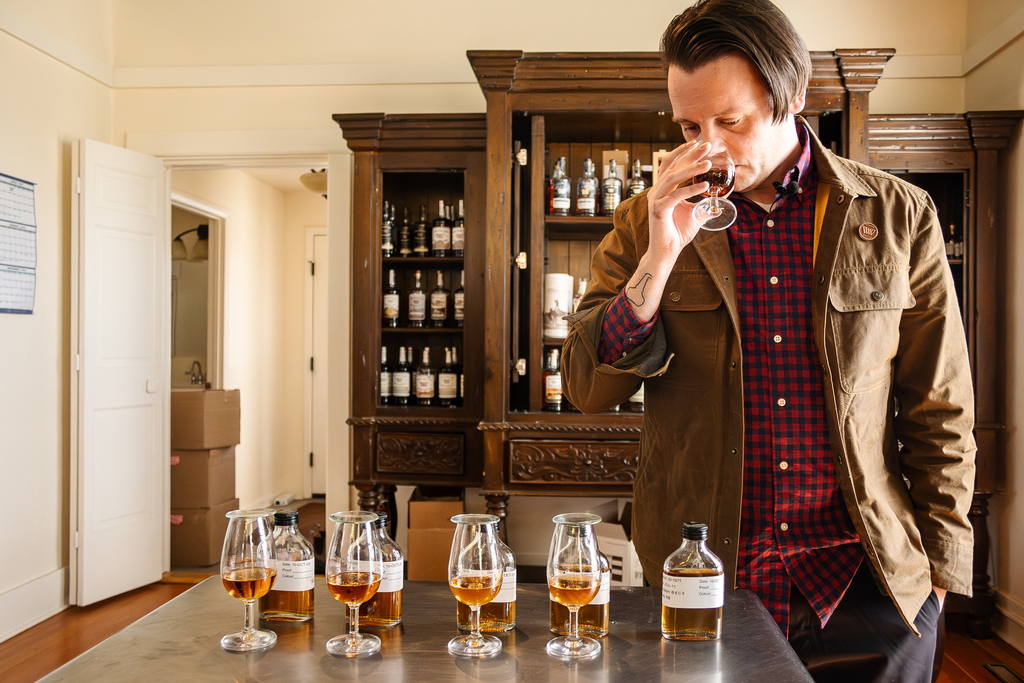
BC: The foundation Steve Nally and Nancy Fraley established remains central to everything we do at Wyoming Whiskey. Steve, with his years of experience at Makers Mark, set the foundations for the distillery by creating our mashbill, choosing both of our yeast strains, and establishing the core production philosophy that still guides us today. He built the framework for how we approach fermentation, distillation, and maturation, and he set the tone for the level of care and precision expected in every stage of the process. Nancy was instrumental in defining the core flavor pillars—caramel orange vanilla, dark dried fruits, and spice—that continue to anchor the brand’s identity today. Their influence is most clearly seen in our approach to balance and consistency across barrels and blends, as well as in the standards we hold ourselves to for every release. My role has been one of stewardship: protecting that foundation while thoughtfully identifying exceptional barrels and building additional layers of complexity that allow the portfolio to evolve without losing its sense of place.
(Credit: Wyoming Whiskey)
RT: One theme about American whiskey-making going coast to coast is how climates very different from the Mid-South play into maturation. So please, do tell us about the Wyoming climate in Kirby and what adaptations you’ve made to your maturation because of it, and how that is different from, say, Speyside or the Bluegrass.
BC: Wyoming’s climate plays a defining role in how our whiskey matures, and it is markedly different from more temperate regions like Scotland or Kentucky. The summers here are intense, driving the spirit deep into the wood and building structure, richness, and depth. In contrast, the devastatingly cold winters slow that interaction dramatically, allowing the whiskey to rest and integrate. This natural ebb and flow creates meaningful variation from barrel to barrel, which is something we embrace.
As a result, our blending approach is less about uniformity and more about balance, bringing together bold, concentrated flavours with softer, more layered notes that develop over time. While our climate is harsh, our spirit and maturation are incredibly delicate, which results in a whiskey that avoids excessive wood influence and instead shows depth and complexity, with integrated notes of spice, dried fruit, caramel, vanilla, and subtle fruit notes that feel distinctly shaped by Wyoming’s environment.
RT: What challenges and opportunities do you see for 2026 and Wyoming Whiskey?
BC: The opportunity lies in continuing to define a clear and compelling sense of place in every release. As the whiskey landscape becomes increasingly crowded, consumers are gravitating toward brands with genuine character and a story that’s reflected in the liquid itself. Wyoming offers a rare combination of climate, grains, and water that simply can’t be replicated elsewhere. The challenge is maintaining that authenticity, ensuring every expression we release reinforces who we are. For us, that means being intentional with our portfolio, leaning into the individuality of each barrel, exploring finishes thoughtfully, and keeping Wyoming’s environment at the center of every whiskey we make.