Whiskey Lawsuits, Bankruptcies and Shutdowns Update
By Richard Thomas
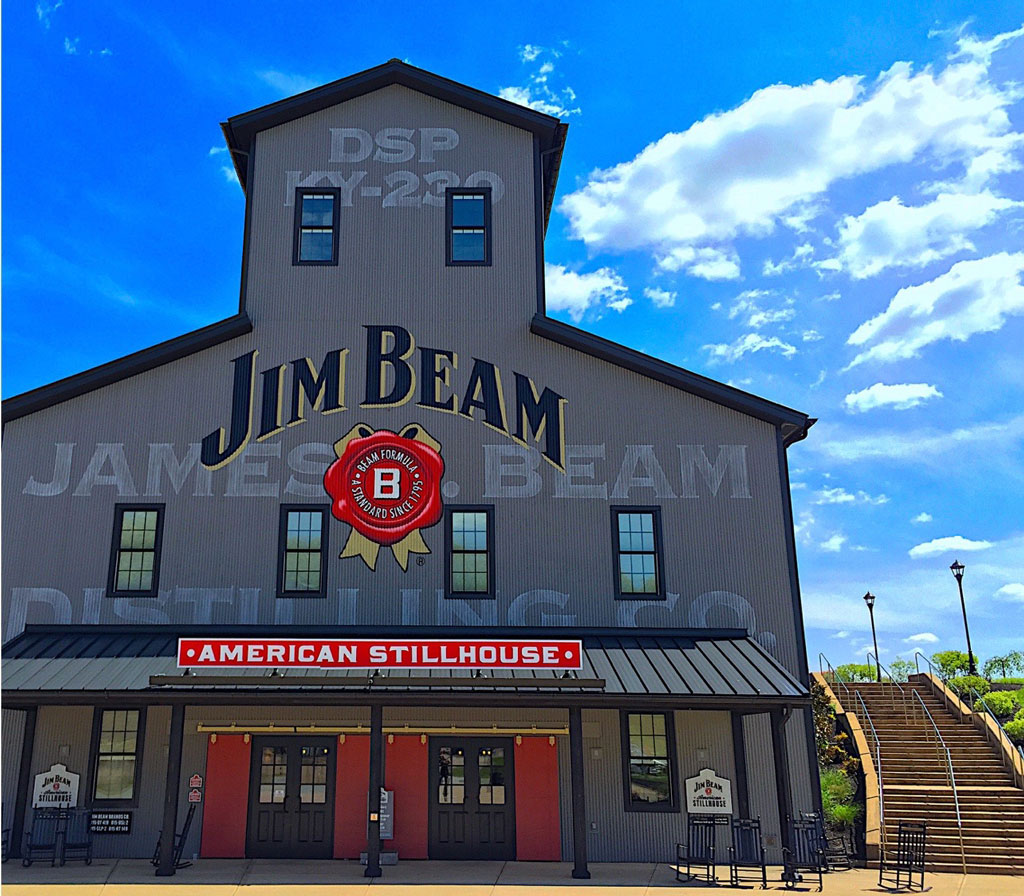
The year 2025 ended with a news story that impacted throughout the world whiskey industry: that Jim Beam, America’s top-selling whiskey company, was shuttering the smaller of their two distilleries. Although the mainstream media handled the story with its typical mix of incompetence and sensationalism (most coverage declared Beam was temporarily ceasing all production, with the reporter seemingly unaware the company operates distilleries at Clermont and Boston, Kentucky), the truth was shocking enough. Although Beam stated the cessation at Clermont was so they could modernize the facility and would result in no lay offs, even if that holds true then at the very least it will mean an end to the perpetual overtime in the stillhouse that has been the rule at every major distillery throughout the Bourbon Boom.
Beam’s closure of Clermont came at a time when sales of whiskey around the world was softening, flattening or slumping, after a decade and a half of surging growth. When the music ended and some were found looking for a chair, leading to a steady succession of stories about bankruptcies and lawsuits, some of which are still ongoing. The picture was especially dire for small distillery, with ASCA reporting that one-quarter of all craft distilleries closed between September 2024 and September 2025. The start of 2026 is as good a time as any to take stock of the ongoing wranglings.
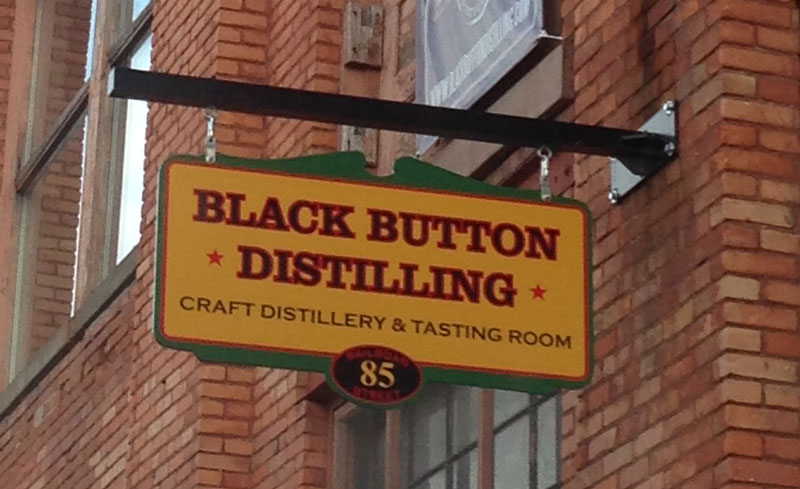
Black Button Distilling
In September, word broke that Black Button Distilling of Rochester, New York had gone bankrupt, but been bought out of bankruptcy by Blackstar Company. At the time of the acquisition, Black Button was reportedly selling its furniture to pay the bills. The latter appears to be a spirits holding company, founded by former Sazerac Vice President Kris Comstock and the founder of Staghorn Spirits, Ray Franklin. Staghorn is the owner of Garrad County Distilling, which will be addressed next, but Franklin left Staghorn to become CRO at Spirits Capital in November 2024.
Black Button was founded in 2012, early enough in the craft distilling wave and Bourbon Boom to be propelled forward by both trends. However, it was only in 2023 that the company embarked on an expansion, opening a new facility with a reported ten times the production capacity. Given that just two years later Black Button would be bankrupt, the expansion was either too ambitious, came at entirely the wrong time or both.
The reprieve for Black Button appears to have been a brief one. Just weeks later, Black Button founder Jason Barrett and his team were called into a meeting and told they were all laid off. Barrett was later brought back as an independent contractor, tasked with selling barrel and bottle inventory. So, despite promises that Jason would continue to run Black Button and Blackstar was there to support the company, it appears the destiny of the company is to see its assets stripped.

Garrard County Distilling
In addition to being sued by their creditors and contractors to the tune of at least $31 million and being delinquent on local taxes, Garrard County Distilling had one more legal proceeding added to their woes in October 2025: the Kentucky Distillers Association, the Kentucky bourbon industry’s trade group and owner of the Kentucky Bourbon Trail concept, sued them for $94,000 in unpaid dues.
Luca Mariano Distillery
It seemed to observers in Kentucky that no sooner Danville’s Luca Mariano Distillery had opened than it closed its doors. In fact, the company entered bankruptcy just ahead of a county hearing to decide whether to auction the it at a master commissioner’s sale to pay off its creditors. The related company that owns the land the distillery sits on is also in bankruptcy.
The fate of the bankrupt company is now sealed: last week a judge ordered the $34.5 million distillery and property be sold to satisfy creditors and contractors.
(Credit: Richard Thomas)
Rogue Ales & Spirits
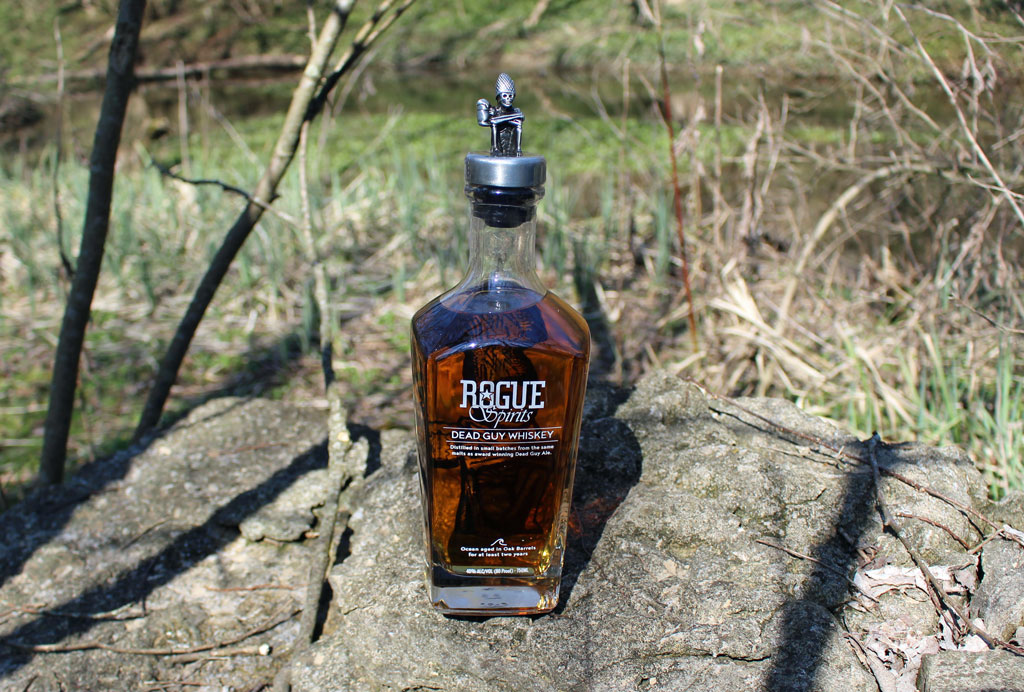
Established in 1988 and principally known as a brewery, Rogue Ales & Spirits also ventured into making malt whiskey, some of which was reviewed by The Whiskey Reviewer. At that point, one of craft beer’s most established names became a brewstillery. In November, they filed for Chapter 7 bankruptcy, reporting $16.7 million in debt. Most of this money was owed to creditors, but substantial sums were also owed in back taxes and state fees.
Chapter 7 is a liquidation bankruptcy, meaning the proceedings move straight to the sale of non-essential assets to satisfy creditors.
Waterford Distillery and Others In Ireland
Waterford Distillery in Ireland has been in receivership since late 2024, and it was almost a year before anyone expressed serious enough interest in the company to buy it out of hock. In November 2025, it became known that Tennessee Distilling Group wanted to acquire the distillery for €6 million. At least as interesting as their interest was the way the proposal was described: it’s clearly stated that the receivers would be left with most if not all of the stocks of aging whiskey held by Waterford.

In other news from Ireland that did not receive quite the coverage in the US that it deserved, New Midleton (makers of Jameson and by far the largest distillery in Ireland) briefly paused production in 2025 while simultaneously postponing the opening of their new distillery to 2027. Dublin Liberties Distillery was closed in May 2025 and has yet to reopen. Powerscourt Distillery in Wicklow has been in receivership since the middle of last year, and Killarney Brewing and Distilling closed in mid-2025 as well.
Westward Whiskey and Other Craft Bankruptcies
Oregon’s Westward Whiskey, one of the most popular American Single Malt brands, filed for bankruptcy in April 2025. Private investors stepped in and purchased the company out of bankruptcy court in October. We know the purchase of the distillery closed before the end of October, but no other news about circumstances at Westward has since been released. Presumably, they are still operating with their previous team intact.
Other lesser known whiskey-makers around the country that filed for bankruptcy include Alton Distillery, A.M. Scott Distillery, Boston Harbor Distillery, Devil’s River Whiskey, JJ Pfister Distillery and McCallum & Sons Whiskey Co.
Uncle Nearest
Last but in no way least is the drama surrounding Uncle Nearest, the whiskey brand built around the name of Jack Daniel’s enslaved mentor in whiskey-making. The developments since the last time I wrote about the company could make for a feature article all on its own, but being part of this summary must suffice for now.

(Credit: 9tynite/Wikimedia Commons/CC by 4.0)
In his report filed October 1, 2025, Uncle Nearest Receiver Phillip G. Young, Jr. indicated that the Weaver’s acquisition of a cognac distillery in France would need financing to the tune of $15-25 million just to make the company operational and bring product to market. He wanted to sell off the cognac business, the Martha’s Vineyard property the Weaver’s bought through Uncle Nearest and other assets while stressing that the core business of Uncle Nearest was viable and could be sustained. The receiver also requested to bring other Weaver-held businesses–which have no direct connection to Uncle Nearest–under the court’s control.
Fawn Weaver retaliated by accusing the receiver of smearing her, which was just one more example of her aggressive counter-offensive in the court of public opinion. Weaver has been combative in her statements on social media throughout the company’s legal troubles, labeling even the most basic coverage of the court case as a “hit job.” The world at large became acquainted with Weaver’s acerbic turn, in contrast to the polish she displayed while hawking her book Love and Whiskey and building her company, when she verbally abused a man on the street for claiming to have been her schoolmate; she was “dragged by the internet” for it, as that saying goes.
In November, Weaver moved to reassert control over Uncle Nearest, protesting that the very fact she was in court at all was undermining the value of her brand and blaming declining sales (in the midst of an industry-wide sales slump) on the negative publicity. The court struck that down in December on the basis that while the company is in receivership, only the receiver could represent company interests. Towards the end of that month, the Weavers filed a lawsuit against their former CFO, alleging fraud.
Then earlier this month, NexGen2780 filed a request with the court to be allowed to buy Uncle Nearest out of receivership. The facts do not justify saying NexGen2780 was created for the sole purpose of stealing Uncle Nearest away from the Weavers, as some internet conspiracy theorists have alleged: the entity was created in June 2025 and the Weavers didn’t land in court until August. But even so, NexGen2780 is shadowy. The only person known to be associated with them is their public face, Walter Miles.