
Glenglassaugh Evolution Scotch Review
By Diana Karou Cheang
Rating: B
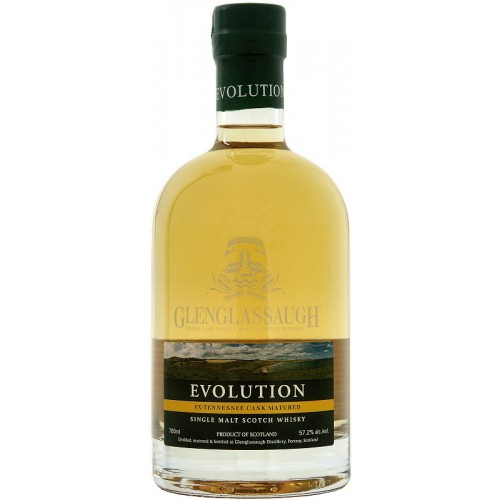
(Credit: Glenglassaugh)
When Glenglassaugh restarted operations in late 2008, it was only the latest turn in the distillery’s long history of ups and downs. The distillery opened in 1875, only to be shuttered in 1908. Some say it was opened again in the 1930s, but the evidence for that is reportedly all oral hearsay at this time. Glenglassaugh’s next certain run was between 1960 and 1986. Like many Scottish distilleries, it was closed during the mid-1980s recession, and when it wasn’t reopened in the 1990s it seemed set to stay that way.
With a history like that, having a single malt dubbed “Evolution” seems not only natural, but positively called for. Glenglassaugh Evolution (50% abv) comes from a single variety of oak cask styles, ex-George Dickel Tennessee Whiskey first-fill barrels. From that, Evolution is aptly named not just from the distillery’s history, but for its agility in blending a harmonious profile of whisky and oak.
The Scotch
The overarching impression of Evolution is that it is a bottle of renewed vigor. With the first drops in a Glencairn glass, one could already surmise that this whisky pours more with the attitude of a champagne than a scotch; it’s unadulterated golden and delicate pallor celebrates its natural color and non-chill filtered origins. It exudes a youthful representation of its flavor to follow.
Upon first introduction, a prominent oak invites the nose to a creamy molasses and butterscotch. A pleasant hug of a green grape rubbed with nutmeg delicately graces the scent, leading one towards the palate. Immediately, a thin and energetic fluid dances to the lips with no viscosity, knocking with exuberance on the lips with instant vanilla, caramel, ginger, and spice. When the taste reaches center mass on the tongue, its energy instantly dissipates in a simple sweetness not represented by any honeys or syrups. Instead, it is cloaked in a tropical, domineering spiciness throughout.
It’s like a creative bartender crafting a home-made simple syrup in an old fashioned ginger root beer with nothing but powdered sugar and playfulness. That said, the spice is a guest who overstays his welcome, sitting on the tongue long before the fluid vacates, and even sits outside on the lips, hanging out on the porch. A contingent of the wood and spice slides down the throat with the same enthusiasm as the prior contingent of ginger fire, but leaves a large wake of astringency with a plastic boot. The finish dissipates extremely long in the same tone, vanishing completely at the end, and one might be convinced to go back to the nose and palate, even if the eccentric finish must follow after.
Evolution definitely demands attention with it’s energetic profile, quite aptly named with an enthusiastic nod to the Bourbon. That said, too much publicity in the spiciness and forceful finish tells only half the story, as if we are simply in the process of evolution; not yet fully specied in the form of an exquisite whisky.
The Price
Evolution is a new introduction, the suggested retail price of the 50% ABV is $79.99, commanding a high price to value ratio. Its availability in the States waffles, and you may have better luck at London online retailers such as Royal Mile Whiskies at about that price, with the exception of a steep shipping fee of around $30 dollars. Please note that there’s also a cask-strength at 57.2% ABV.
The “Evolution” is made using ex-Tennessee whiskey casks, so maybe you shouldn’t reference a “nod to the Bourbon”.
Nevertheless, I just ordered a bottle 🙂
Tennessee Whiskey is bourbon. Our official position is that it is the most singular sub-category of bourbon, but that it is bourbon is not in dispute anywhere but in bars and the marketing department of Brown-Forman.
Technically, yes. But, as you alluded to, I bet George Dickel wouldn’t be happy about being referred to as a Bourbon.
Also … just for the love of debating … the Tennessee whiskey filtering process removes flavors and is intended to enhance existing flavors. It is changing/enhancing the flavor profile by adding that sugar maple charcoal filtering step. Is taking flavor away, in some ways, technically the same as adding flavor? Would love to listen in on that debate!!!
Anyway, whiskeys all around the world are filtered one way or another. So, where would we draw the line?
So … after reading and thinking … you are right. All Tennessee whiskeys are Bourbons, but not all Bourbons are Tennessee whiskey. Just like all Bordeauxs are wines, but not all wines are Bordeauxs. The definition of “Bourbon” is very simple, so the range of examples is broad. Basically, they used a place’s name (Bourbon county) to define a product that can be made outside of that location, which can lead to confusion.
I’m glad you understood the complexities already. At it’s root for this instance, the Scotch industry as a whole does not make a distinction between, say, Jack Daniel’s and Jim Beam. To them, it’s all “ex-bourbon barrels,” and that includes George Dickel’s stablemates at Diageo. So, I think if Nicole Austin one day decided she wanted to complain about Johnnie Walker referring to her leftovers as bourbon barrels, she might be quietly and politely told to mind her own business 🙂
It’s fun that an eleven year old review written by someone I haven’t spoken to in seven years brings all this up.
FYI … your whisk(e)y site is my go-to site for quality reviews. The historical and background notes are appreciated and always done well. Of course, whisky is a very personal item, with everybody having different palates and differing/evolving preferences. But I’ve learned I can have a high level of trust in the descriptions and ratings here.
Keep up the good work.