Finding your perfect whiskey rhythm at the virtual felt
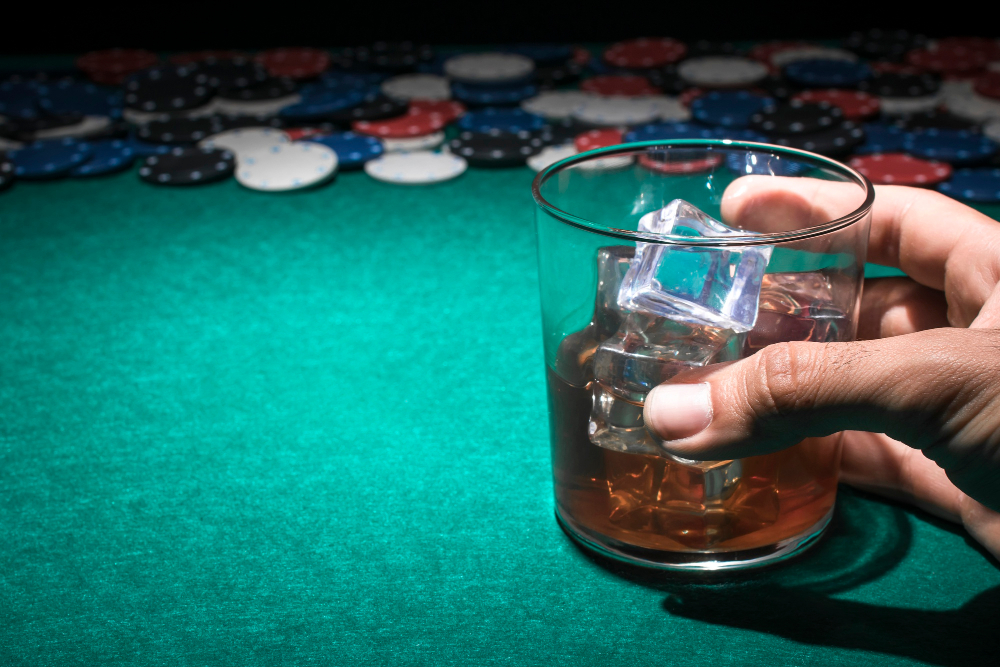
Online gaming spaces feel hollow by design. They’re all pixels and code. No weight to anything. But a glass of whiskey has weight. It has a smell. It has a history. Bringing the two together isn’t about drinking and gambling. It’s about taking something weightless and giving it gravity.
Longtime players notice this quickly. The right pour changes how someone plays. Not because it loosens them up, but because it slows them down. A sip, a taste, a pause to think. The game keeps moving, but the player stays anchored to something real.
Why a whiskey ritual matters more than you think
Walk into any casino in Las Vegas or Atlantic City and the same scene appears. Rows of people at slot machines, completely zoned out, feeding bills into machines like robots. No glass in hand. No awareness of time passing. Just the trance.
Walk over to the poker room and the crowd looks different. Guys sipping Macallan 12, taking their time with decisions. The drink isn’t an escape. It’s part of the ritual. The pour, the glass, the first sip, that sequence tells the brain: “This is an occasion. Pay attention.”
This is why the physical matters in a digital world. When you log into a platform like 21bit Casino, you’re entering a space with no weight, no texture, no smell. Just a screen. Bringing a proper whiskey into that session changes the equation. Suddenly there’s something real to hold onto. Something that existed before you logged in and will still be there after you close the laptop. That continuity matters more than most people realize.
What most people get wrong about drinking and gaming
The warnings are everywhere. “Don’t drink and gamble.” And sure, if someone’s slamming shots and chasing losses, that’s a disaster waiting to happen. But the data tells a more interesting story about ritual itself. Players who maintain a consistent routine, whether a specific drink, music, or even a seat position, tend to make more consistent decisions over long sessions. The ritual reduces cognitive load. No need to decide how to feel or how to act. Just follow the pattern. The whiskey becomes part of that pattern.
One study in the Journal of Gambling Studies found that blood alcohol levels above 0.05% correlated with riskier betting behavior across multiple game types. So the key is moderation. The ritual, not the intoxication.
Matching the whiskey to the game
Not all games feel the same. And not all whiskeys feel the same. Experienced players have developed pairings that work. Mileage varies, but here are some that hold up.
-
For poker: something that takes its time
Poker is a marathon, not a sprint. The right whiskey unfolds slowly, doesn’t hit all at once and then disappear.
Ardbeg Uigeadail works well for this. It’s smoky, but there’s a layer of sherry sweetness underneath that only emerges after the glass has sat for fifteen or twenty minutes. Smoky Scotches from Islay have a reputation for this kind of complexity. According to the Scotch Whisky Association, Islay malts account for only about 4% of total Scotch production, but they dominate conversations among enthusiasts.
The smoke clears the head. The sweetness rewards patience. Much like a good poker hand.
-
For blackjack: something with snap
Blackjack moves fast. The dealer flips, decisions come quick. Hit, stand, double. No time for long contemplation. The whiskey needs to wake up the senses, not put them to sleep.
Bulleit Rye fits this well. High rye mashbill, 95% rye according to their specs. That peppery bite cuts through everything. It’s the whiskey equivalent of a double espresso shot.
At 90 proof, it’s strong enough to stand up to ice without disappearing. Blackjack sessions run long, and the whiskey needs to survive the melt.
-
For slots: something friendly
Slots players often want to turn the brain off for an hour. Scroll on the phone, watch the reels spin, not think too hard.
That calls for an easy drinker. Something that doesn’t demand analysis. Buffalo Trace fits the bill. It’s reasonably priced, sweet, vanilla-forward, approachable. According to their distributor, it’s the most awarded bourbon of the last decade, which means it’s consistently good without being precious.
No need to think about it. Just drink it.
The setup: building the space
Here’s something online gaming doesn’t teach. The room matters more than the game. Bad lighting, uncomfortable chair, cluttered desk, it all adds up to a worse experience.
Keep it simple. One good light source, a lamp with a warm bulb, placed to the left so it doesn’t glare on the screen. One glass. Not necessarily crystal, just heavy enough to feel substantial. Something from Crate & Barrel works fine, nothing special, but it becomes yours over time.
Water matters too. Always water. A glass on the other side, room temperature. Whiskey is 60% water anyway, and the palate dies without hydration.
The digital and the tangible
The thing about virtual spaces is they ask for nothing except your attention. No rituals required. No preparation needed. You can click in and out in seconds. But the sessions that stick with you, the ones you remember days later, those usually involve something more.
A whiskey in hand turns a quick session into a real one. It forces a slower pace. It adds texture to something that would otherwise be flat. And when you finally close the laptop, that last sip waiting in the glass reminds you that the experience isn’t over just because the screen went dark.
One last thing
Whiskey doesn’t make anyone play better. It doesn’t. If anything, too much makes play worse, and the data backs that up. But a little, with intention, with ritual, that’s different. That’s about bringing the whole self to the experience instead of just a clicking finger.
Find the glass. Find the pour. Find whatever online space works. Treat the whole thing like it matters. Because it does.