Blade & Bow 22 Year Old Bourbon Review (2026)
By Richard Thomas
Rating: A-
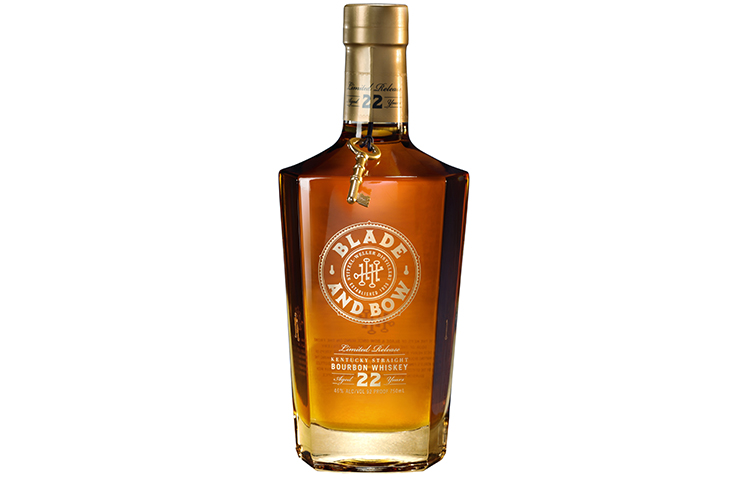
(Credit: Diageo)
The only time The Whiskey Reviewer has written up the annual release of Blade & Bow 22 Year Old Bourbon was 2016. That was a decade ago, and a time span like that not only screams for a second look, but also a comment on all that has changed with the Blade & Bow brand since then.
I wrote up Blade & Bow 22 a full season before Hillary Clinton was sabotaged out of the presidential election by so many Washington actors playing politics as usual. That year was also back when Bulleit did not have had a distillery to call its own, and so the brand called the Stitzel-Weller Distillery in the Louisville industrial suburb of Shively its home. Both Bulleit and Stitzel-Weller are owned by British drinks giant Diageo, as is Blade & Bow. Back then, Blade & Bow was a secondary brand at Stitzel-Weller. Nowadays, it is the main brand associated with the property, and often a co-sponsor of events hosted by Garden & Gun magazine.
But remember that Stitzel-Weller Distillery has not had an operational stillhouse since the Nineties. The property’s legendary rickhouses continued to store and age whiskey, and serving as a tourist attraction and events space was added to that function during the Bourbon Boom years. Insofar as the 22 year old expression goes, Diageo sold Bernheim Distillery to Heaven Hill in 1999 and did not open the Bulleit Distillery until 2017. In the intervening two decades, all their bourbon was sourced. Even though 22 years is the minimum age of the bourbon bottled here, I think it doubtful that much, if any, is drawn from pre-1999 stock, so it’s probably sourced.
The Bourbon
Bottled at 92 proof, the bourbon takes on a dulled, middle amber coloring in the glass. The nose led with a hefty serving of caramel and butterscotch, so quite candied, but this was backed by a dry current of spices, especially clove. As the drinking experience went on, the presence of that dry and spicy aspect grew to occupy more of the stage. On the palate, it developed more character, melding with the sweet side to present more as a jar of cinnamon toast brown sugar and spice blend. On the back end, the dry oak note came to forefront, but dropped back again once things rolled over into the finish, at least initially. But after a moment or two, the sweetness faded back and it was the dry, oaky, spicy aspect that prevailed and lingered.
The back and forth between the sweet and dry, spicy aspects are nicely balanced or otherwise restrained, making this whiskey not nearly the oak bomb that two decade old bourbons can sometimes be. Because of that, it’s a refined, approachable example of what ultra-aged bourbon can be, and very suitable for serving to folks who would be turned off by something like Pappy Van Winkle 23 Year Old.
The Price
Officially, this bottling is priced at $1,100. That is much more reflective of its true market value than is often the case with these ultra-aged, annualized American whiskeys, as online retailers are asking between $1,300 and $1,500 to acquire one on demand. That isn’t much of a gap compared to, oh, George T. Stagg.