Brown-Forman Rejects Second Sazerac Offer; Alabama Cooperage To Close
Updated July 28, 2026
By Richard Thomas
(Credit: Public Domain)
Brown-Forman has rejected a second unsolicited bid from Sazerac to buy the company, made yesterday. The terms of the second offer have not been disclosed.
Sazerac’s original unsolicited offer bid $32 a share, which would have amounted to roughly $15 billion, during the merger negotiations between Brown-Forman and French drinks giant Pernod Ricard. The merger talks ended in failure at the end of April, and Brown-Forman declined Sazerac’s offer shortly thereafter.
Brown-Forman was assumed to be negotiating to merge with Pernod Ricard to form a well-rounded, international spirits company that could rival Diageo, one in which the Browns would be de facto equals with the Ricards as the two largest, but still minority shareholders. Sazerac, by contrast, is actually a smaller company than Brown-Forman and the core business for both is American Whiskey. Another key point is that Sazerac offered to essentially buy the Brown family out. Although Brown-Forman is a publicly traded company, the Brown family owns a majority of all stock and a commanding majority of the critical Class A stock that confers voting rights.
Wolf Pen Branch, LP, the collection of Brown family members that dominates Brown-Forman, said, “As fourth-, fifth- and sixth-generation shareholders of Brown-Forman, we care deeply about the company – its brands, its people, and its culture. We are confident in the strength and competitive position of the business, and believe the company is well-positioned to deliver long-term value for all shareholders. We have concluded that Sazerac’s proposal does not align with this vision for Brown-Forman’s future.”
Some analysts believe the second offer by Sazerac may have been triggered by the news that Brown-Forman’s CEO is to retire. The company’s CEO, Lawson Whiting, is 57 years old and leaves at a time when Jim Beam has supplanted the Brown-Forman property Jack Daniel’s as the world’s second-best selling whiskey and after the failed merger talks with Pernod Ricard. However, if that were the case, the timing would be strange: Whiting is still the CEO and his replacement has not been named, let alone been installed. The leadership team at Brown-Forman remains the same as the when the initial Sazerac offer was rejected.
Jack Daniel’s One-Time Cooperage To Close
Another development for Brown-Forman is that the cooperage built to service the needs of Jack Daniel’s is now scheduled to close its doors. The announcement was made last week.
(Credit: Brown-Forman)
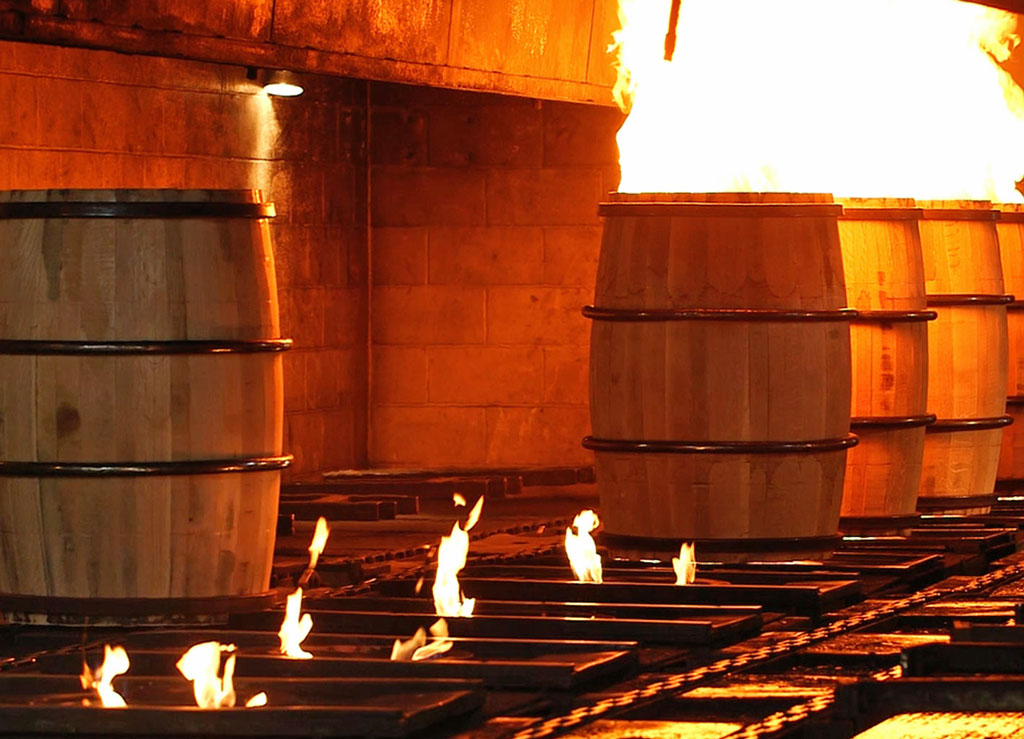
Ironically, one of the features Brown-Forman used to have in common with Sazerac is that they were both vertically integrated companies in terms of barrel sourcing. For decades, Brown-Forman made all of their own barrels, used by Jack Daniel’s, Old Forester and (after the 1990s) Woodford Reserve at a plant in Louisville. As the Bourbon Boom increased the demand for barrels at all three distilleries, Brown-Forman moved to build a new cooperage in Trinity, Alabama, built specifically to service the needs of Jack Daniel’s. The new plant opened in 2014.
Ten years later, Brown-Forman sold this cooperage to Independent Stave Company (ISC). Then in 2025, the company announced it would close its historic Louisville cooperage, exiting the business of making their own barrels entirely.
Now ISC has indicated it will close the Trinity, Alabama cooperage in September. More than 70 workers will lose their jobs. The closure of this cooperage built specifically to supply Jack Daniel’s demands comes at a time when many distillers in the US have enacted “distilling holidays” of a year or longer, and zero production equals no new barrel orders. Although Jack Daniel’s is not one of the distilleries that has gone on a “holiday,” they are a client of ISC and the larger trend may have made the Trinity plant surplus to ISC’s requirements.
Updates:
On the morning of Tuesday, July 28 Forbes reported on leaked documents regarding the first and second proposals made by Sazerac to acquire Brown-Forman. The second proposal did not increase the offer, which remained $32 per share (approximately $15 billion for the entire company). Instead, it provided more analysis by way of illuminating why Sazerac wanted to acquire Brown-Forman, the advantages the acquisition would bring and Sazerac’s strategy for maximizing growth in the enlarged company, as well as assurances that little would change about Brown-Forman’s operations.