Q&A With High West’s Distiller And Blender
A Long Chat With Issac Winter and Tara Lindley
By Richard Thomas
(Credit: Trevor Hooper/Constellation Brands)
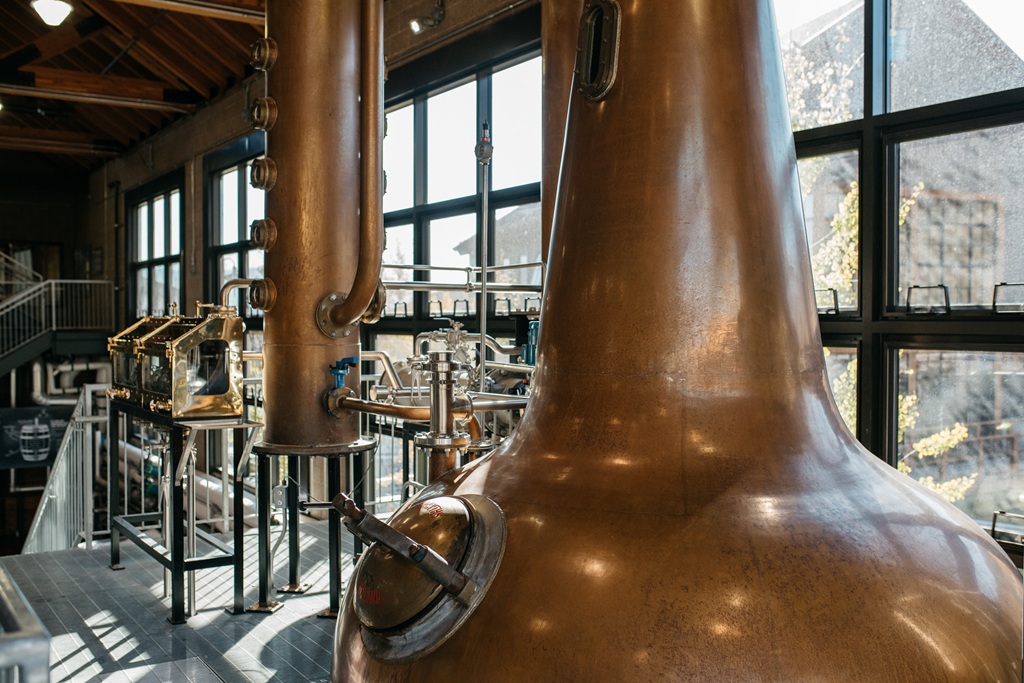
Utah’s High West Distillery got its start so early in the craft whiskey boom of the 2010s that they could be described as one of the companies that pioneered a now bedrock business model for small distilleries everywhere: start building your brand with sourced whiskey while financing and building your actual distillery, then transition. The company has changed quite a bit since they were a start up with a commitment to transparency in sourcing that made them an instant fan favorite: new owners; firing up their own stillhouse and then only partly transitioning to in-house spirits; and expressions coming and going over time.
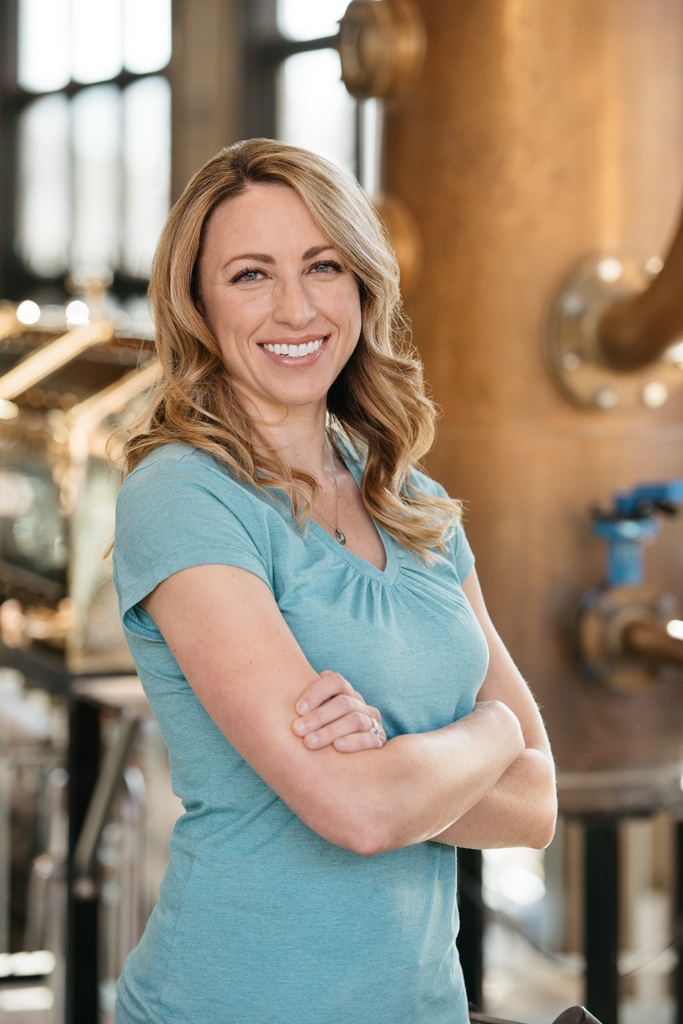
Keeping all that in mind, I decided this was a good time to check in with the team that actually makes the magic at High West, their Master Distiller and Master Blender, Isaac Winter and Tara Lindley.
RT: You are both longtime High West hands, having been there for a decade or more, and my understanding is you were both hired around or just after Constellation Brands bought High West. That was also just after the distillery proper opened in 2015. So, you’ve been around for pretty much the entire post-indie, doing good-sized, in-house distilling period. I’m sure you’ve seen a lot change in that time — do tell us about it.
IW: You’re right, our core team has been around for a very long time. I think this is so important for continuity of flavor and profile. In our tenure, we’ve moved from hand labeling & hand penning every bottle; throwing every bag of pre-milled grain to fully automated grain handling; and having all our maturing stock under one roof to needing multiple warehouses. The thing that remains the same is our approach to whiskey creation: using a combination of column and pot still streams, vibrant and very-well-matured stocks, and the same iterative blend assembly process. While we may have gotten bigger over the years, our attention to detail and commitment to quality hasn’t changed a bit.
TL: Oh wow… where do I start?!
(Credit: Constellation Brands)
I’ve seen a lot of change over the last 10 years. When I first joined High West, we were still pretty scrappy. Everyone pitched in wherever needed. It wasn’t unusual to be helping on the bottling line, hand-labeling bottles, corking bottles, or for a blender to help me with proof downs or doing whatever needed to get done. Our lab was small, and the distillers, blenders, and sensory team all worked in the same space.
Since then, we’ve grown tremendously. We now have a state-of-the-art bottling line with a dedicated team, our lab and sensory capabilities have expanded significantly, and we’ve invested in the facilities, people, and resources needed to support a much larger operation. We’ve also grown our distillation, warehousing, and aging programs, which gives us more opportunities to innovate and build for the future.
What I think is most impressive is that the core of what makes High West special really hasn’t changed. We’re still focused on creating unique blends, finding interesting ways to bring whiskies together, and exploring how different finishing barrels can create something unexpected while maintaining balance and complexity.
RT: Can you hint at anything that might be coming for the upcoming 20th anniversary?
IW: We are constantly tinkering with new mash bills, finishing profiles, and blends. We can’t let anything slip just yet, but we look forward to celebrating our 20th anniversary with a bang.
TL: I’d probably get myself in trouble if I started dropping hints, so I’ll keep it vague. What I can say is that a 20th anniversary only comes around once, and we’re treating it that way. We’re planning a special celebration at the saloon on December 5, and there will be something special released as part of the festivities. If you’re a High West fan, save the date!
RT: What is your favorite High West whiskey and how do you like to take it? Neat, cocktail, rocks?

(Credit: Constellation Brands)
IW: My favorite High West whiskey is Bourye. It’s my favorite blend we get to put together. What’s better than going into our inventory and selecting our favorite old, chewy whiskey?? I prefer this neat, however if I’m picking one desert island cocktail a Prisoner’s Share Manhattan is pretty hard to beat.
TL: This is a tough one because I always seem to fall in love with whatever project we’re working on at the moment. However, if you’re going to make me choose a favorite child, I’d have to say it’s The Noble Share.
The Noble Share is a blend of rye whiskeys ranging from four to nine years old that includes high rye mash bills from both High West rye and MGP. The blend is finished in Casa Noble Marqués de Añejo tequila barrels with a portion finished in Amburana barrels, which helps create a really unique flavor profile.
What I love most about this whiskey is how the different components work together. The rye provides a layer of herbal complexity that carries throughout the experience, the tequila barrels contribute a beautiful cooked agave character, and the Amburana barrels add just a touch of cinnamon stick and baking spice. In my opinion, it’s best enjoyed neat so you can fully appreciate all of the nuances created through the blending and finishing process.

(Credit: Richard Thomas)
RT: Tara, High West built its reputation on transparency in sourcing, which was a big scoring point for whiskey nerds in the early days of the Bourbon Boom. Now that has segued from blending all sourced whiskeys into blending in-house and sourced, and I think its expressions like Campfire and Double Rye that the enthusiasts who knew High West then still identify you with now.
TL: I think one of the things High West has done well over the years is stay true to our roots while continuing to evolve. Transparency around sourcing was a big part of our story early on, and as our own whiskey has come of age, we’ve been able to incorporate it into our blends without changing the fundamental philosophy behind what we do.
Whether we’re working with sourced whiskey, our own distillate, or a combination of both, the goal is the same: create the best whiskey possible. We don’t typically think about where a component came from nearly as much as what it contributes to the final product.
Double Rye and Campfire are still great examples of the High West approach. They’re bold, unique, and not necessarily what people expect, which is exactly why they’ve resonated with whiskey drinkers for so many years.
RT: I also think blending is the most underappreciated part of the production process, so could you take us through what goes into crafting a new batch of even an established product, like Campfire, Rendezvous or Double Rye?
(Credit: Trevor Hooper/Constellation Brands)
TL: I agree that blending is probably one of the most underappreciated parts of whiskey production. Distillation gets a lot of attention, but blending is where we have the opportunity to build complexity and shape the final experience.
Any time we begin blend maintenance, which is our process for updating core blends year to year to maintain consistency, we begin by evaluating all of the eligible whiskies individually in sensory against a historical control. This gives us a clear understanding of what each whiskey can contribute and how it compares to our target flavor profile. From there we start experimenting with the larger components of the blend, evaluating different ratios before fine-tuning the smaller, more impactful components. It’s a very methodical process that requires us to understand how individual whiskies react synergistically with each other in the blend.
Ultimately, our goal is to preserve the character that our consumers know and love from products like Campfire, Rendezvous, and Double Rye while working with our available inventory. Having historical controls from the early days of each product helps us deliver that consistency through the years.<
RT: High West used to source from a handful of suppliers, including MGP, but in recent years it has settled on MGP for the most part. It looks like in the middle term future, more distillers will want to part with some of their aged stock. Would High West have any interest in diversifying again, perhaps to create some limited editions?
TL: We’re always keeping an eye on the market and evaluating opportunities to bring in whiskey or other spirits from different producers. That said, MGP has been a significant part of our blending strategy for many years, and many of the flavor profiles that define products like Double Rye and Bourbon are built around those components. Consumers know and expect those profiles, so we’re not looking to make major changes to our core products for the sake of change.
Where other distillates become especially interesting is in innovation and limited releases. When we source from outside our traditional suppliers, we’re typically looking for something that brings a unique flavor profile. The Prisoner’s Share is a great example. Across its releases, we’ve incorporated different spirits and mash bills that each contributed something distinct to the final blend.
Sometimes those components make up a significant portion of a limited release, and other times they may be used in much smaller quantities to add a specific flavor attribute or help us achieve a target profile without fundamentally changing the character of the whiskey.
As blenders, we try not to limit our options. Our goal is always to find the best components for the job, whether that’s our own distillate, MGP whiskey, or something from another producer. What matters most is what that component brings to the final blend and whether it helps us create a better whiskey.

(Credit: Richard Thomas)
RT: Isaac, although High West is better known these days for its blends of in- and out-of-house whiskeys, you’ve had some launches of entirely in-house stuff, like the Bottled in Bond and the Single Malt. And you were basically there the entire time for those projects. What’s it like to grow these new all in-house whiskeys from the ground up?<
IW: High West will always be a blending house – we will always look to get our hands on the most beautiful whiskies in the world. If we can’t find something, however, it’s nice to have a “custom whiskey lab” where we can create that special blend component that sets the recipe off just right. We spend years obsessing about grain sourcing, fermentation protocols, and maturation strategies and at the end of all of that it’s so nice to show off the hard work the team has put in. Projects like Bottled in Bond and High-Country Single Malt let us feature our own Utah-made whiskey in its own spotlight, differentiating us from true NDPs. We can do it all.
RT: I also understand you’re experimenting with aging in foeders? And concrete tanks? What is the intention there?
IW: High West has made a name for itself in the blending space and for cask finishing. For a long time our single barrel program has served as a playground for rapid R&D. It was from this program that we got the ideas for crowd favorites like Midwinter Night’s Dram, Yippee Ki Yay, and The Prisoner’s Share. Our large format maturation project is an extension of that idea. This is pure R&D, a sort of “let’s see what happens.” Foeders are near and dear to my heart. I come from the beer industry and am most familiar with their use in sour beer production. Foeders offer a different surface area to volume ratio than a traditional barrel, my hope is that we can really lean into oxidative maturation rather than extractive maturation and end up with a product with a much different smell, taste, and texture. We’ll see! It’ll be ready when it’s ready.