Octomore Series 16 Brings The Peat For 2025
By David Levine

(Credit: Bruichladdich)
Octomore—in case anyone forgot—is the most heavily peated whisky in the world. Produced each year since 2008 by Bruichladdich Distillery on Islay, these whiskies are a reminder that you should be conscious of who you drink around. I tried 16.1 and 16.2 across the room from my wife and let’s just say she didn’t stay in that spot very long.
We take for granted that plenty of consumers who like peat will buy these just to say they have them or that they’ve tried them and “made it through”. Yes, it’s heavily peated. Generally, anything over 30 ppm (measured on the barley pre-mashing) to be heavily peated, meaning giants like Ardbeg, Laphroaig, and even Highland Park all can say they’re heavily peated by most people’s measurements.
Octomore cranks that to over 100 ppm on every release. Octomore 16.1 and 16.2 come in at 101.4 ppm as the reference pour and cask finished versions, respectively, for this edition. The 16.3 hits the red zone at a face-melting 189.5 ppm for the local barley grown on Islay’s Octomore Farm.
What I’ve always found fascinating about peat is the way we perceive and interpret the levels. Scientifically, it’s recognizable at as little as 1 ppm, about the equivalent of someone malting barley a mile away from someone using peat to malt theirs. If you put pours like The Classic Laddie (unpeated), Jura or Talisker (lightly peated), Highland Park (~20 ppm), and any peated edition from Ardbeg, Laphroaig, Lagavulin, or Caol Ila, you’ll notice a significant difference in peat influence at each level. This is to say nothing of the range of flavors present.
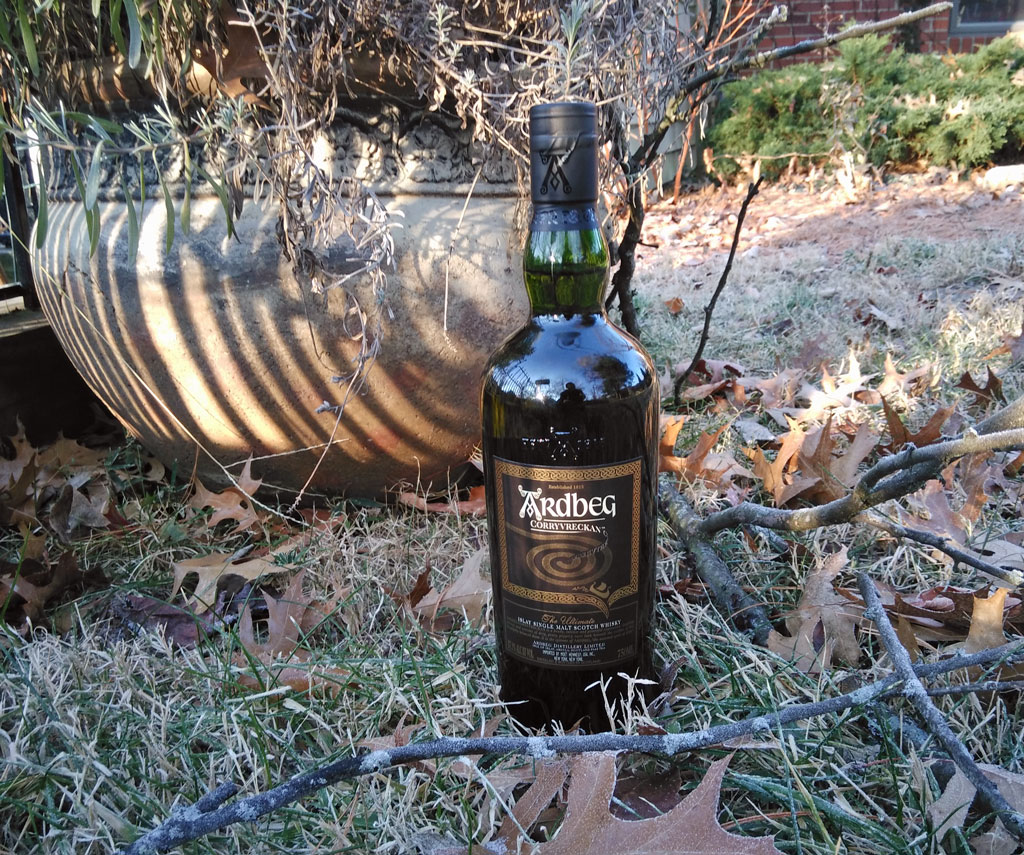
(Credit: Richard Thomas)
Once I get past a certain point, I stop getting progressively more peat and instead start smelling and tasting more of the complementing flavors initially masked by the earth and smoke. Yes, the Octomore series is a powerhouse of peat that can’t be easily replicated or outshone. It is, still, far from a one-trick pony. And even though I get more peat objectively between the 16.1/2 and 16.3, it’s clearly different in both strength and flavor.
While Octomore makes its living on being the most heavily peated pour on the planet, I would argue it’s underselling itself. It’s not a candy or hot sauce at some ungodly Scoville unit that people put in their mouths just to say they’ve done it or that they can handle that level of spice (on that topic, if you do desire to burn your tongue and scar your insides, I highly recommend Party Fowl in Nashville and their Poultrygeist sauce – I had two drops and tasted it for as many days). When you’re talking about 2 million-plus Scoville units, do you think anyone really cares how fruity the pepper tastes behind the spice?
No, Octomore is not that. It pushes the boundaries of how much peat smoke and flavor can adsorb to malt and subsequently survive the brewing and distillation process. It takes that already intensified peat and pairs it with an ex-bourbon cask, the traditional post-war cask for maturing malt whiskies, to give us a reference point in the 16.1 with which we can look around the whisky landscape and compare it to the rawest expressions from other peated products. Then, there’s the 16.2, where the peat is paired with flavor bombs in cask form, none of which are subtle, to the point where the peat may underrepresent what you think a 100+ ppm should taste like.
(Credit: Wikimedia Commons/Public Domain)
Then, of course, there’s the 16.3, where Islay barley from the Octomore farm is included. Case in point: you don’t use barley that is more expensive to process, harder (and more expensive) to grow, and limited in its volume in your most peated expression if all you want people to remember is how peated it is. Bruichladdich wants us as consumers to still taste what their own barley is like. It may take a few tries to get a clear picture behind 189.5 ppm, but it’s there and it’s wonderful.
So, to summarize, if you’re buying Octomore 16.1, 16.2, or 16.3 to say you can handle super heavily peated whisky, congrats, good for you. Please, though, don’t forget to appreciate the flavors present behind, in front of, and alongside the peat monster. Enjoy these for the excellent whiskies they are.
And keep the less peat-inclined family members upwind.
Octomore 16.1 (2025) Bourbon Barrel Maturation
Rating: B+
The Price: $204.99
59.3%/118.6º
5 Years Old
101.4 PPM
Eye: Pale straw. Thin rims, medium legs, medium teardrops.
Nose: Damp, dark earth aflame. I could imagine a balrog enjoying this. The malt has vanilla undertones and candied lemon peel. No proof or astringency on the nose. Freshly made tires, bog fires. S’mores, burnt marshmallows and dark chocolate open with air.
Palate: Ashy, peppery, and charred vegetables on an open flame. Proof pricks up quickly, settling mid-tongue, asphalt on a hot day. Vegetal smoke is predominant. Savory herb stems, numbing on the upper palate. Mouthfeel is velvety, medium-bodied and piquant, sharp pepper grabs my tongue. A touch of honey emerges on the chew. Coating.
Finish: Vegetal embers, wet leaves falling into a fire. The damp earthiness suggests a deeper peat, while the sweet malt and vanilla hang on just enough through the finish. Very long.
Overall: The earthy vegetal profile dominates, and it’s redundant to say this is quite peaty. It remains balanced, with the proof peaking at the right moment to prepare you for more smoky flavor as it hits your tongue. I’d like a little more sweetness, maybe a newer bourbon barrel (1st fill?). If you lean towards the vegetal side of peat, this is a home run for you. For me, I’ll recognize it as a triple.
Octomore 16.2 (2025) Oloroso, Bordeaux, Madeira, and Moscatel Casks
Rating: A
The Price: $244.99
58.1%/116.2º
5 Years Old
101.4 PPM
Eye: Light caramel, just starting to turn. Medium sloughing rims, few legs and large drops.
Nose: Holy fruitcake! Red fruit, rum sweetness, madeira powerhouse, even some black walnut. Damn that’s good. Dark pretzel crusts and demiglace. Sweet and unctuous. Peat barely noticeable past the casks’ strengths. No proof on the nose.
Palate: Smoky fat, white pepper on the tip of my tongue, lights up the front half to third of my palate. Sweet, the peat emerging more as the casks add mild astringency that dries a bit more with a chew. Red and tropical fruits on an open flame grill. Mouthfeel is medium-to-heavy and filling, creamy and piquant, fruits drying and concentrating into syrup. Pomegranate molasses, dark pretzels, grill marks on sausages.
Finish: Sweet-smoke continues to dazzle. The earthiness found in 16.1 is masked (mostly) by the casks with red fruit syrup filling my while palate. Medium-long finish lingers on the back palate and upper/roof of my mouth.
Overall: Remarkably different from 16.1. The cask power on the nose is bonkers, with the peat a background player. Evens out during the sip to become sweet and smoky, light on the proof drinking closer to 100-105. This is more my wheelhouse of peat, great mouthfeel that hits all the right notes.
Octomore 16.3 (2025)
Rating: A-
The Price: $279.99
100% Concerto Barley from Octomore Farm
Bourbon, Sauternes and Pedro Ximénez casks
61.6%/123.2º
5 Years Old
189.5 PPM
Eye: Reposado tequila. Thin rims and syrupy legs. Tiny droplets.
Nose: A smoking fire with salty fish and charred bread. Verging on medicinal, definitely some iodine notes and sea salt in there. Melting fat over a flame. Dry earthiness, pile of late autumn leaves. Smoked oysters.
Palate: Round, sweet fruit suffuses the tongue as fruit wood smoke goes up my nose from the back. Applejack, a bit of proof midline on my tongue. Smoked earth, flame going on the dried leaves. Salt spray persists. Mouthfeel is deceptively heavy, the PX and sauternes lurking in more texture than flavor. Smoked fruit and burnt wine.
Finish: Barest numbing on the front third of my tongue. Earthiness takes over, detritus entering winter warmed by a fire. Floral flavor emerges, rose and lavender. Medium length, moderately coating.
Overall: What I imagine an early Norse barbecue (or whatever the not-anachronistic term is) would be. Clearly far more medicinal than the 16.1 or 16.2, but from the salt and fish and iodine, not burnt rubber. This was a lot even for me – it’s not aiming for balance, but for power, and it delivers. The detritus flavors are surprisingly welcome, and the sauternes and PX casks are about as mellowed and in-control as I’ve ever seen either cask be in a whisky.
Editor’s Note: Octomore 16.4 is set as a distillery-only release and will not come out until next month, so it was not available for this article.