The Quarter Ounce Problem: Where Whiskey Bars Quietly Lose Their Margin
By Vyron Johnson
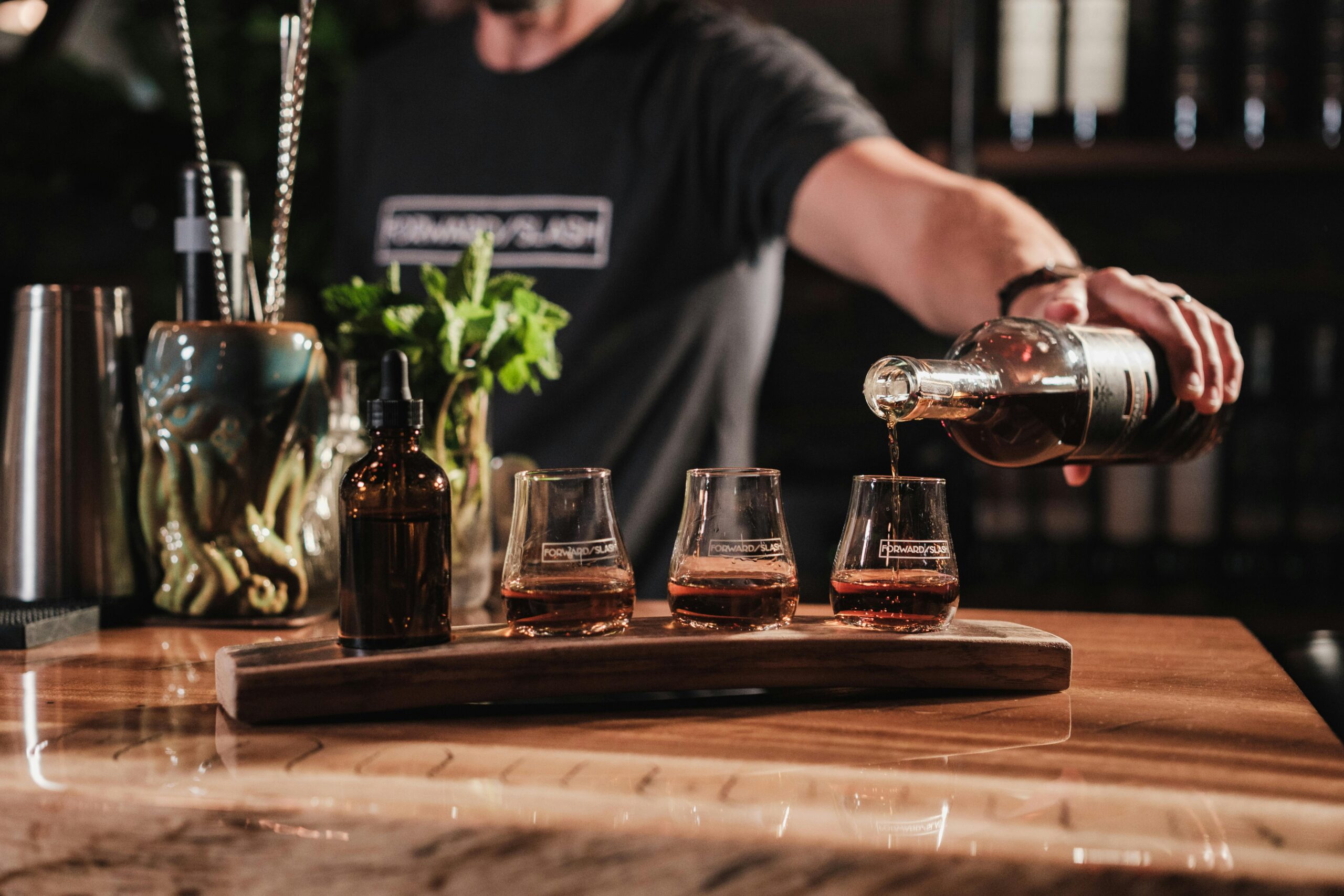
A bartender pours a bourbon for a regular. Not a heavy pour, nothing anybody would call a mistake. Just friendly, maybe a quarter ounce past the line, because the guy tips well and it is a slow Thursday.
Nobody notices. That is the point of the pour.
I owned Club Luna in Greenville, South Carolina, before I started building inventory software, and I have read a lot of variance reports since, mine and other people’s. The quarter ounce is the thing I see most often, and almost nobody doing it knows they are doing it.
Run it on one bottle
A 750ml bottle holds 25.36 ounces. At a 1.5 ounce pour, or two if your neat pours run long, that is about 16.9 drinks. Say the bottle cost you $45, which puts a lot of respectable bourbon on a back bar. Cost per pour is $2.66, and at a $12 menu price your pour cost sits at 22 percent. Healthy.
Now let the pour drift to 1.75 ounces, which is roughly what free pouring looks like three hours into a shift. That bottle now yields 14.5 drinks. Cost per pour goes to $3.11. Pour cost climbs to 26 percent.
You lost 2.4 drinks off that bottle. At $12 each, about $29 that never existed, off a quarter ounce nobody could see in a glass.
Now put two hundred open bottles behind the bar, which is modest for a serious whiskey list, and run a busy month. If you want to watch the number move on your own bottles, this free pour cost calculator will do it.
Whiskey does not forgive you
Vodka hides it. A quarter ounce disappears into a tall glass of soda and lime, nobody tastes it, nobody complains, and the bottle cost eighteen dollars.
Whiskey has nowhere to hide.
The price spread does most of the damage. A quarter ounce off a twenty dollar well bourbon costs you about twenty cents. A quarter ounce off a $150 bottle costs $1.48. The gesture is identical. The bill is not.
Most of it also goes out neat or over one large rock, so the pour is visible. A generous whiskey pour is a gift the guest can see, which means bartenders give it more often and regulars learn to expect it.
Then there is allocation. When a bottle finally lands you cannot simply reorder it, and the secondary market has left the replacement cost of a lot of shelf bourbon detached from whatever you actually paid. Eagle Rare 10 Year is the obvious case, a bottle plenty of bars still price like an ordinary call pour while sitting on a shelf they cannot restock at anything close to that number.
Put that $150 bottle on the list at $28 for a 1.5 ounce pour. Cost is $8.87, a 32 percent pour cost, which is livable at the top of a list. Let it drift to 1.75 and the cost is $10.35 against the same $28. Now you are running 37 percent on the one bottle you cannot call your distributor about.
The jigger argument
Every bar has this fight and I do not think it has a clean answer.
The free pour camp is right about speed. A jigger [costs a second or two a drink and on a Friday those seconds are real. They are wrong about everything above the third shelf. A bartender’s count is accurate right up until the bar gets slammed, which is the only time the volume is high enough for the drift to matter.
So free pour the well. Around a hundred dollars a bottle, a quarter ounce of drift starts costing you a dollar every time it happens, and that is where I start measuring. Jigger it, or fit a measured pourer. If the bottle is rare enough, weigh it. Somebody paying forty dollars for two ounces of something scarce is not going to complain about watching it get measured. In my experience people paying top dollar for liquor rarely complain about much.
Plenty of bars do not bother jiggering a rum and Coke and I understand why. The high volume chains measure everything. Nothing behind those bars gets free poured.
The leak is different in every bar
Owners get this wrong and it costs them good staff.
When the count comes up short the first instinct is that somebody is stealing. Sometimes somebody is. At Luna I had bartenders whose problem was the pour, bartenders whose problem was comps, and at least one whose problem was theft. Same bar, same bottles, three completely different leaks. Which one you have depends on who is working, and it changes when the schedule changes.
That is the part owners miss when they go looking for a single villain. Overpouring is usually the biggest number and almost none of it is malicious. It is muscle memory and a busy Friday. You do not fix that with a camera in the well. You fix it by showing a bartender a number most of them have never once been shown.
A monthly count cannot find a quarter ounce
Count once a month and you are holding thirty days of sales against thirty days of pours. Everything blends. A quarter ounce here, a comped round there, a bottle knocked off the rail on the ninth, all of it lands in one variance figure. You learn you are down money. You do not learn which bottle.
Counting by shift sharpens it fast. Instead of a vague monthly loss you find that the Friday close runs three ounces light on one specific bottle, every week. That is a training conversation, not an accusation.
What a useful count looks like
Measure to the tenth of a bottle, not to “about half”. Eyeballing a bottle as half full is a two ounce error before you have written anything down.
Same bottles, same point in the shift, every time. That matters more than getting any single number perfect.
Pull the POS figures for the same window and compare what should have poured against what did. A variance number with no sales figure next to it tells you nothing.
And read it bottle by bottle. “Whiskey is down four percent” is not actionable. “The Eagle Rare is down eleven percent and the rest of the shelf is clean” tells you where to stand tomorrow night.
None of this requires software. Plenty of sharp operators run it on a clipboard and a spreadsheet and get it right. It requires doing it often, and doing it to the tenth.
Vyron Johnson has been in the nightclub business since 2005 and owned Club Luna in Greenville, South Carolina. He is the founder of BarGuard, which tracks liquor inventory at the ounce level and compares expected against actual usage shift by shift.
DISCLAIMER: This article is paid advertising, written and sponsored by BarGuard.